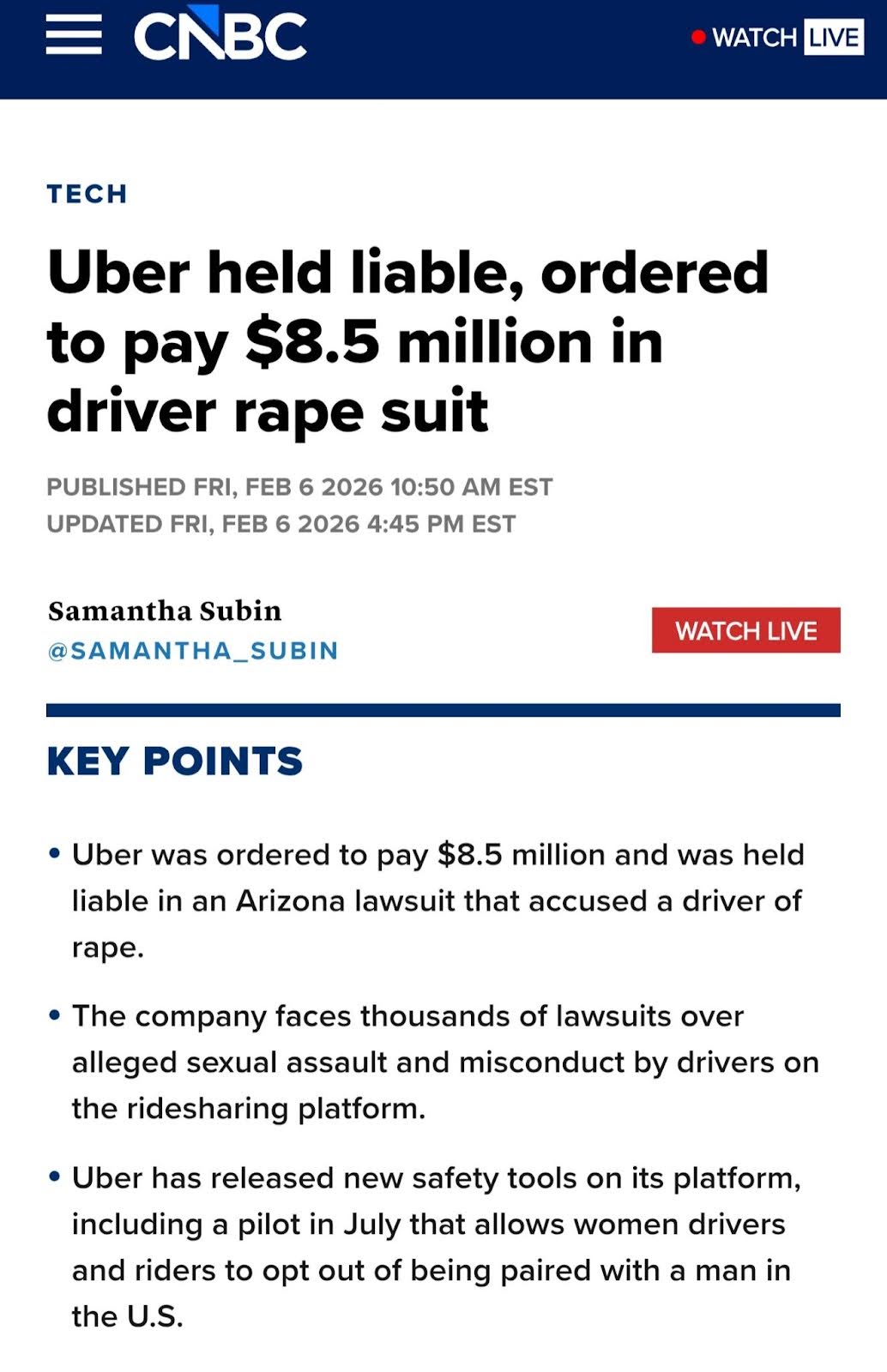
In a significant legal blow to the ridesharing giant Uber, an Arizona jury has held Uber Technologies liable for the actions of one of its drivers, ordering the company to pay $8.5 million in damages.
This verdict marks a potential turning point for corporate accountability within the gig economy, specifically regarding passenger safety and the prevention of sexual violence. There are no less than 8000 cases in courts at the moment, with potential liability of Uber exceeding $25 billion!

The Verdict and the Allegations
The lawsuit, brought by plaintiff Jaylynn Dean, centered on a harrowing incident that occurred in November 2023. According to court documents, Dean alleged she was raped by her Uber driver while being transported back to her hotel.
On February 5, 2026, the court ruled in favor of Dean, finding that the tech company bore responsibility for the assault. While Uber has long argued that its drivers are independent contractors, a classification intended to shield the company from various legal liabilities, this ruling suggests that juries are becoming increasingly skeptical of that defense when it comes to fundamental passenger safety.
A Wave of Litigation
This Arizona trial is not an isolated incident; rather, it is the first to reach a verdict among thousands of lawsuits currently facing the company. These legal challenges collectively accuse Uber drivers of various forms of sexual assault and misconduct.
The scale of these allegations has put Uber under intense public and legal scrutiny. For years, advocates have argued that ridesharing platforms have prioritized rapid growth and market dominance over robust vetting processes and real-time safety monitoring. This $8.5 million judgment may serve as a bellwether for the thousands of cases still pending in the judicial system.
Uber’s Response: New Safety Initiatives
In the wake of mounting legal pressure and public outcry, Uber has begun implementing new safety features designed to protect vulnerable users.
- Gender-Based Pairing: In July 2025, the company launched a pilot program in the U.S. that allows both women drivers and riders to opt out of being paired with men.
- Safety Toolkit Expansion: The platform has integrated various digital tools, such as an emergency button and GPS tracking sharing, to provide riders with more immediate recourse during a trip.
While these features represent a step toward addressing safety concerns, critics argue they are “too little, too late” for the victims who have already suffered. The Arizona verdict emphasizes that providing tools for users to protect themselves does not absolve the platform of its duty to ensure the people they “employ,” regardless of their technical classification, are not a danger to the public.
The Future of Ridesharing Safety
The $8.5 million award to Jaylynn Dean sends a clear message to the tech industry: platform immunity has its limits. As the gig economy continues to evolve, the distinction between a “technology platform” and a “transportation provider” is blurring in the eyes of the law.
For Uber, the road ahead is fraught with legal complexity. With thousands of similar cases waiting in the wings, the financial and reputational stakes are immense. This ruling may force a fundamental restructuring of how ridesharing companies vet their workforce and monitor active rides, potentially leading to stricter background checks and more invasive safety protocols.
Ultimately, the Dean case highlights a sobering reality: behind the convenience of a smartphone app are real-world risks. As this landmark case concludes, the focus now shifts to the remaining thousands of plaintiffs seeking their own day in court.
Email me your comments to sergio@therideshareguy.com
Sergio@RSG