Uber has found another way to get drivers to do what the company wants without necessarily giving them the information they need to make an intelligent business decision. This time, it’s called Cruise Zones, and the sales pitch sounds pretty attractive: stay within a designated geographic area, accept rides, and earn a guaranteed hourly minimum that can exceed $25-30 per hour.
What’s not to like? Well, as usual with Uber, you need to read the fine print before getting too excited.
I have spent nearly 11 years driving for Uber in Los Angeles, completed thousands of trips, and watched the company introduce one incentive program after another. Some have been worthwhile, while others have been nothing more than clever ways to manipulate driver behavior. Cruise Zones deserve a closer look because they potentially change one of the most important advantages drivers have, the ability to choose which rides are worth accepting.

What Are Uber Cruise Zones?
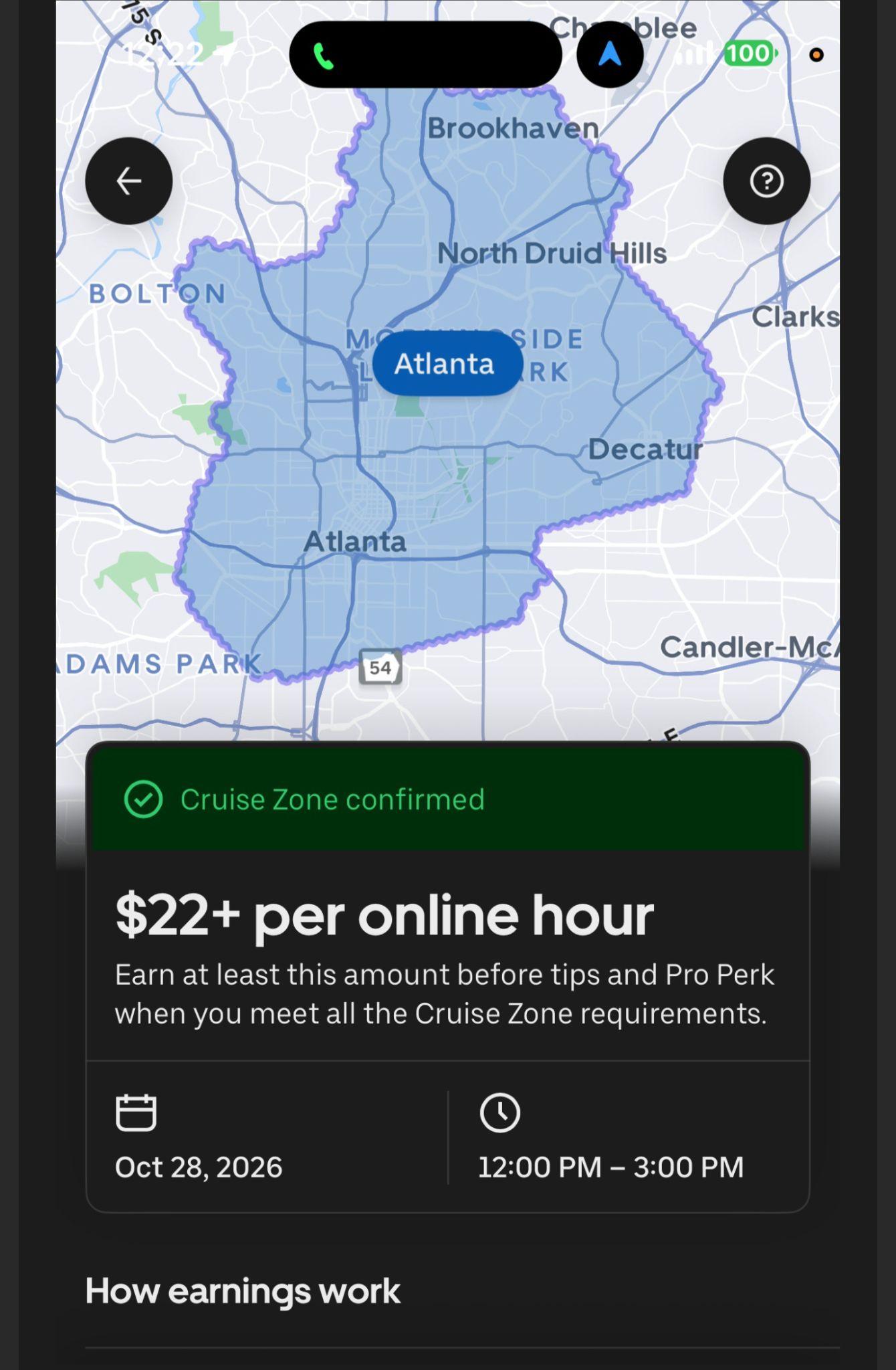
Uber is testing Cruise Zones with select drivers in select markets. Drivers can find available opportunities under the Discover section of the Uber Driver app.
The concept is relatively simple. Uber offers a designated geographic zone, a specific time window, and a guaranteed minimum hourly payment. One advertised example was a San Francisco zone offering $30 or more per online hour during an 8 a.m. to 11 a.m. window.
Once enrolled, and slots are limited, drivers must remain within the designated zone, and eligible trips must both begin and end inside that zone. If their eligible trip earnings fall below the guaranteed minimum, Uber makes up the difference.
For example, if you spend two hours in Cruise Mode with a $30 hourly guarantee, Uber guarantees $60 in earnings. If your eligible trip earnings total only $50, Uber adds $10.
Sounds straightforward, right? Not so fast.
Here’s What Uber Isn’t Advertising
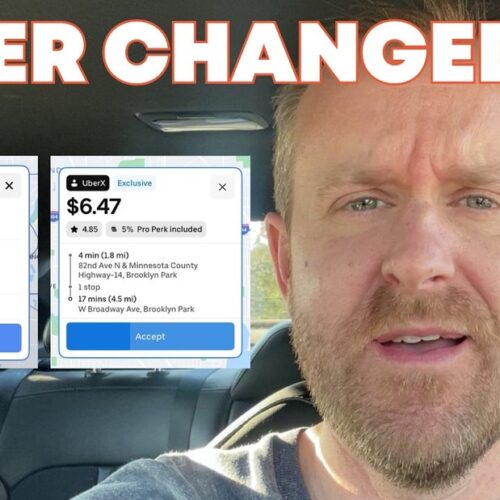
The biggest catch is that drivers give up upfront fare information while operating in Cruise Mode. Instead of seeing the usual upfront earnings offer, drivers see trip duration information, and their earnings are calculated using an hourly rate for active trip time.
There is another restriction that deserves attention: drivers can decline or cancel no more than two requests during the session. Exceed that limit, and you lose eligibility for Cruise Mode.
Think about that for a minute. One of the biggest advantages of upfront pricing was giving drivers the ability to evaluate a trip before accepting it. We could calculate the estimated dollars per mile, consider the destination, account for dead miles, and decide whether the offer made economic sense. Cruise Zones take much of that discretion away.
Uber wants drivers available in specific locations, during specific hours, accepting trips that fit its marketplace needs. In exchange, it offers an hourly earnings floor.
Why Is Uber Doing This?
Let’s not pretend Uber is introducing Cruise Zones purely out of generosity. The company has an enormous marketplace to manage. It needs drivers positioned where passenger demand exists, particularly during periods when supply and demand are difficult to balance.
Surge pricing, Boost promotions, Quests, and other incentives have historically been used to influence driver behavior. Cruise Zones are another tool in that toolbox. The difference is that Uber is now offering a guaranteed hourly minimum in exchange for tighter control over where drivers operate and which trips they accept.
From Uber’s perspective, this creates more predictable driver availability. From the driver’s perspective, it means surrendering flexibility.
Should Uber Drivers Accept Cruise Zones?
My answer is simple: It depends on the numbers, not the marketing.
If you normally gross $30 an hour during busy periods, why would you accept a $30 guarantee and give up your ability to cherry-pick rides? You are potentially sacrificing higher earnings for a guarantee you might have exceeded anyway. On the other hand, if you are driving during a slow Tuesday afternoon and struggling to gross $20 an hour, a $30 guarantee could be attractive, assuming the conditions are reasonable.
But remember something fundamental: $30 per online hour is gross revenue, not net profit. Your vehicle still depreciates, tires still wear out, insurance still needs to be paid, and every mile you drive has a cost. A guaranteed hourly rate means very little if Uber keeps you busy driving long distances for relatively little money.
I would also track how many miles you accumulate during each session, how much Uber contributes toward the guarantee, and what your actual cost per mile looks like.
My Advice: Run the Numbers Before Signing Up
I wouldn’t automatically reject Cruise Zones, but I certainly wouldn’t embrace them without testing the economics.
If Uber offers you $30 per online hour during a slow period, in an area where you already want to drive, it might be worth experimenting with. However, keep a detailed record of:
- Total online hours versus active trip hours.
- Total miles driven, including repositioning.
- Actual trip earnings versus Uber’s guarantee adjustment.
- Total earnings per mile and per hour.
- How many requests you declined or canceled.
- What you would have earned using regular upfront pricing.
Compare those numbers against your normal driving strategy. Don’t let a guaranteed hourly number cloud your judgment.
My Final Take
Uber Cruise Zones might be a useful tool for certain drivers, in certain markets, during certain hours. But let’s be honest about what Uber is asking in return: less flexibility, less fare transparency, and fewer opportunities to reject unprofitable rides.
I have always believed that rideshare drivers need to operate like small-business owners. My time is for sale to the highest bidder, not to the platform offering the most attractive marketing slogan.
Uber can introduce Cruise Zones, hourly guarantees, quests, bonuses, and whatever other incentives its algorithms dream up. At the end of the day, I will continue measuring my success by net profitability, cost per mile, and the return on my time.
Drivers, would you give up upfront fares and the ability to decline more than two rides in exchange for a guarantee $25-30 per hour? Or is this another attempt by Uber to turn independent contractors into employees without providing employee benefits?
I want to hear what drivers think, especially those who have already tested Cruise Zones in their markets.
Be safe out there!
Email me your comments to sergio@therideshareguy.com
Sergio@RSG