Empower is now undercutting Uber and Lyft with cheaper NYC rides, but TLC says its illegal. Uber defends its robotaxi strategy as competition heats up with Waymo’s next-gen deployment. Lyft’s stock tumbles despite record profits. A California ballot battle over rideshare liability and attorney fees kicks off with dueling Super Bowl ads. We break it all down for you.
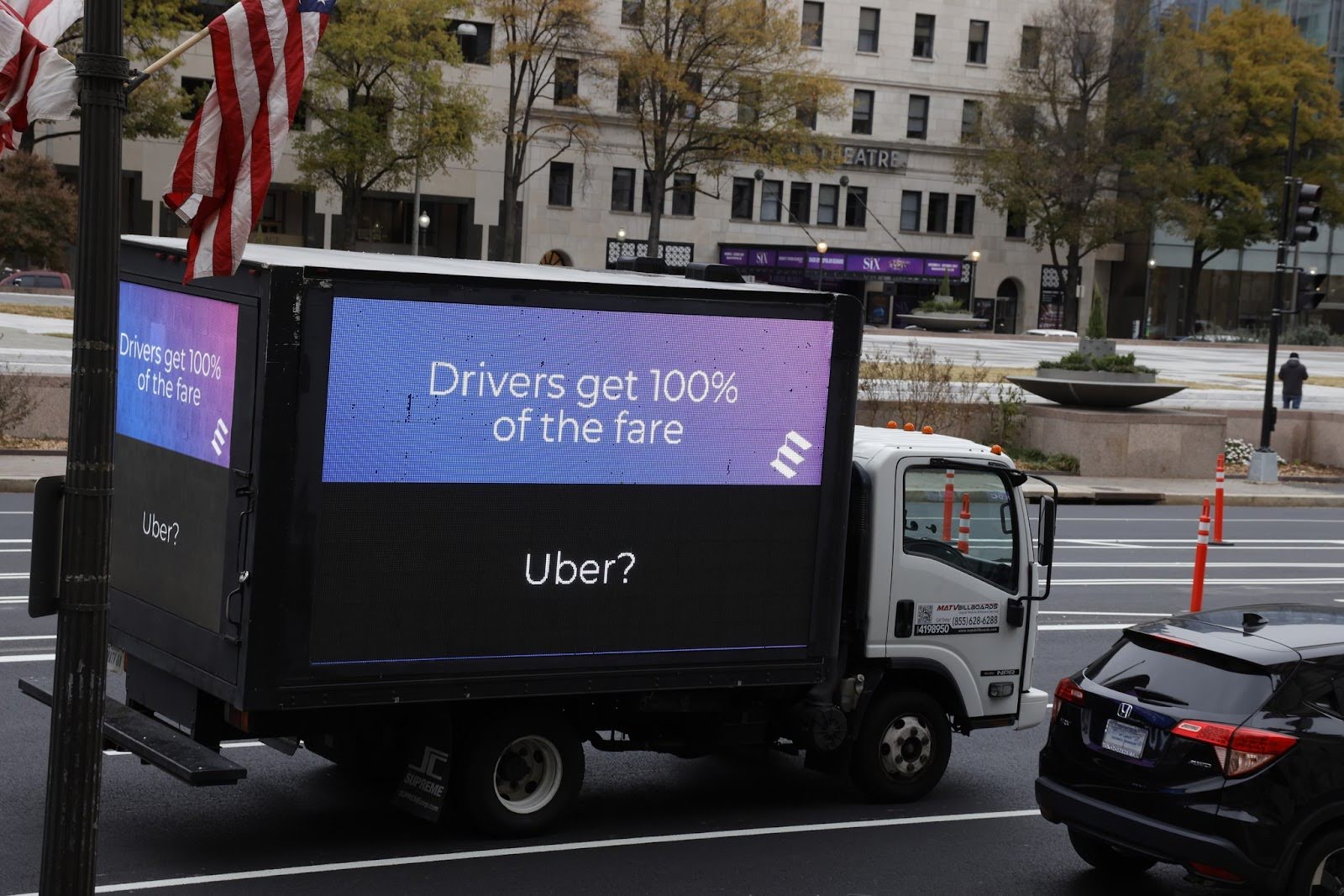
Unlicensed Empower App Undercuts Uber and Lyft with Cheaper NYC Rides, Defies TLC Regulations
Source: Gothamist
Empower is now operating in New York City, despite circumventing TLC requirements, offering rides up to 60% cheaper than Uber and Lyft. The platform charges drivers $50 monthly and allows them to keep 100% of fares while setting their own prices. However, the TLC warns drivers face fines up to $500 and loss of licensure if they are caught using the app, while riders have no protection if issues arise.
- Sample pricing shows dramatic differences: Bushwick to SoHo cost $28.18 on Empower versus $68 on Uber and $60 on Lyft.
- Empower CEO Joshua Sear is following Uber’s 2010s playbook, entering markets without approval and currently facing civil litigation in Washington D.C., where a judge held the company in contempt for continuing operations despite court orders.
- The Taxi Workers Alliance notes some union drivers use Empower for supplemental income, but emphasizes the app needs to enter the market legally, with concerns that unregulated platforms historically lead to poverty wages and shift all risks to drivers.
Uber Positions Hybrid Driver-Robotaxi Platform as Competitive Edge Against Waymo and Tesla

Source: Axios
Uber CEO Dara Khosrowshahi is framing the company’s robotaxi expansion as a growth opportunity, arguing that Uber’s global network efficiency makes it an “indispensable demand layer” that standalone AV companies lack. In Austin and Atlanta, where Waymo operates on Uber’s platform alongside human drivers, the company reports 30% more trips per vehicle daily and 25% shorter wait times versus robotaxi-only platforms. Uber expects robotaxis in 15 cities globally by year-end, up from seven currently, aiming to become the world’s largest facilitator of AV trips by 2029.
- Uber says its strategy leverages human drivers to handle demand spikes during peak times and events, while robotaxis provide consistent baseline supply, a flexibility that standalone networks like Tesla and Waymo lack, with AVs also redirectable to Uber Eats deliveries during slow periods.
- Uber has secured commitments for at least 65,000 robotaxis from partners including Lucid, Nuro, and Waabi, while expanding internationally with Chinese partners like Baidu, WeRide, and Pony.ai.
- Despite the robotaxi momentum, AVs currently account for just 0.1% of all rideshare trips globally, with Uber projecting they’ll remain a small market portion for many years as the company phases deployment through three stages over the next 5-10 years.
Lyft Stock Plunges 15% Despite Record Profits as Ridership Falls Short of Expectations

Lyft’s stock dropped 15% after reporting Q4 2025 results that included record profitability and over $1 billion in cash generated, but disappointed Wall Street with 29.2 million active riders versus 29.5 million expected and 243.5 million rides versus 256.6 million estimated. CEO David Risher defended the results, citing “no softness” in consumer demand and highlighting the Monday launch of Lyft Teen accounts, arriving over two years after Uber, as well as the FreeNow acquisition in Europe as future growth drivers. The company’s soft Q1 2026 guidance projects bookings of $4.86-$5 billion versus $4.93 billion expected, with adjusted EBITDA of $120-$140 million versus $139.8 million consensus.
- Partnerships and rewards drove significant growth, with over 25% of Q4 rides linked to a partnership and 26% year-over-year growth in business travel rewards, while the United Airlines partnership gained hundreds of thousands of linked accounts in its first weeks.
- High-value mode rides grew over 50% year-over-year for the second consecutive quarter, driven by rewards program adoption, with the DoorDash partnership now including 3 million linked accounts.
- Lyft plans autonomous vehicle expansion with Waymo and Baidu, with self-driving cars launching in Nashville in 2026, while touting 13-15% Super Bowl volume growth year-over-year with faster pickups and lower surge pricing than competitors.
Uber and Trial Lawyers Launch Dueling Super Bowl Ads Ahead of High-Stakes California Ballot Battle

Source: CalMatters
Two competing Super Bowl ads signaled the opening of what could become one of 2026’s most expensive ballot measure campaigns in California, with tens of millions already committed and spending potentially reaching hundreds of millions. A proposed ballot initiative would change state law by capping attorney fees at 25% in car accident cases, a measure championed by Uber to reduce legal costs in the state. However, personal injury lawyers are waging a similar measure that would make it easier for Californians to sue rideshare companies.
- Uber’s ad attacked “billboard lawyers” who take large chunks of settlements, promoting its ballot measure to sharply limit contingency fees in auto accident lawsuits.
- The personal injury attorneys’ ad cited New York Times reports on rideshare sexual assaults to support measures that would impose new regulations on rideshare companies and make them easier to sue.
Waymo Deploys Sixth-Generation Ojai Robotaxis to Employees, Plans Public Launch Later in 2026

Source: CNBC
Waymo began offering rides to employees and their guests on its sixth-generation driverless system using Geely-made Ojai vehicles in San Francisco Bay Area and Los Angeles, with plans to expand to new cities and open to public riders later in 2026. The upgraded system uses more cost-effective parts and improved sensors that should navigate harsher weather conditions, serving as “the primary engine for our next era of expansion” with better vision through upgraded lidar and radar systems.
- The Ojai vehicles, with a boxier design and lower step, raised GOP concerns in a recent congressional hearing about using Chinese EVs, but Waymo spokesperson Sandy Karp confirmed the company provides no access to autonomous driving technology, sensor data, or rider information to Zeekr or parent company Geely.
- Waymo’s sixth-generation system features a breakthrough 17-megapixel imager allowing the system to see around vehicles with fewer cameras, integrated cleaning systems to maintain visibility in rain and ice, and leverages significant lidar cost reductions from the automotive industry.
- The deployment comes as Waymo pushes to extend its U.S. lead while planning expansion to 10 additional U.S. cities this year, including Dallas, Denver, Detroit, Houston, and others, plus London as its first international market.
QUICK HITS
- Waymo is starting to pay DoorDash delivery workers to close doors for its robotaxi vehicles. – CNBC
- Some scammers are using rideshare drivers as mules to steal credit cards. – Patch
- Want to learn more about the robotaxi industry? Subscribe to The Driverless Digest, our new newsletter and podcast dedicated to the future of autonomous vehicles.
Must Listen Or Watch RSG Content
Here are this week’s featured podcast episode and YouTube videos:
- RSG268: Uber’s NEXT Big Move? Taxis!
- 5 Rules You Are BREAKING When Driving Uber In 2026
- The 2026 Mileage Tax: How Much Will You LOSE?
- How This Uber Driver Gets Tipped on 40%+ of Rides (Real Strategy)
- Make sure you Subscribe so you don’t miss out on future conversations and interviews!