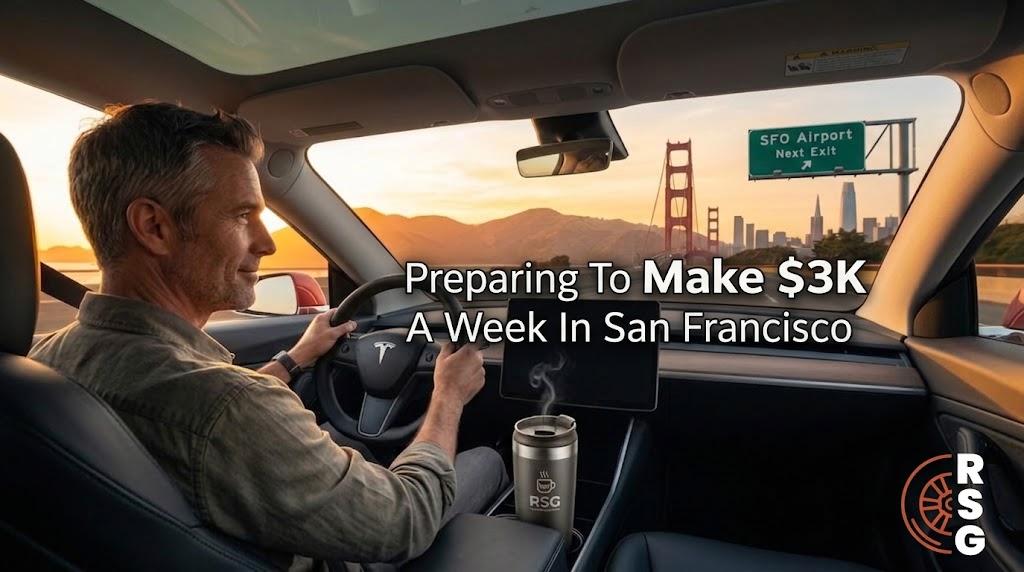
What can I say? I miss it. I have to come back to the United States to deal with my mom’s storage unit, and I thought, why not drive while I’m there? Why not do it in the city where it all started for me, San Francisco? So let’s do it. But coming back to driving after a year away isn’t as simple as opening the app and hitting the road. Getting back to peak earning mode takes a deliberate warm-up. Physical. Mental. Logistical. All before the real push toward the number even begins.
1. A Few Warm-Up Days Before the Real Push
It’s been over a year since I drove for money. That is a long time to be away from a city like San Francisco. I am building a runway. I will arrive a week early and drive five days straight, no goals, no pressure, just miles. I want to relearn the traffic patterns, the one-way streets downtown, the spots where 280 backs up near the airport. I want to see what has changed in the app since I left. Then I will take a couple of days off to see my daughter. After that, I will know if I am ready for the real push, seven full days aimed straight at the number.
There is a wrinkle. I need to find a 24 Hour Fitness near wherever I am staying, because I am not skipping workouts for this. Long shifts and no gym is a bad combination for me. And I need to watch my diet. I eat keto. When I get hungry behind the wheel, my discipline slips, and a doughnut starts sounding like a very good idea. That is not a small thing over five, then seven, days of driving. Rule one of the comeback: eat before the shift, not during it. Pack the food. Do not trust a hungry version of myself to make good decisions at a gas station counter.
2. Solving the EV Charging Puzzle
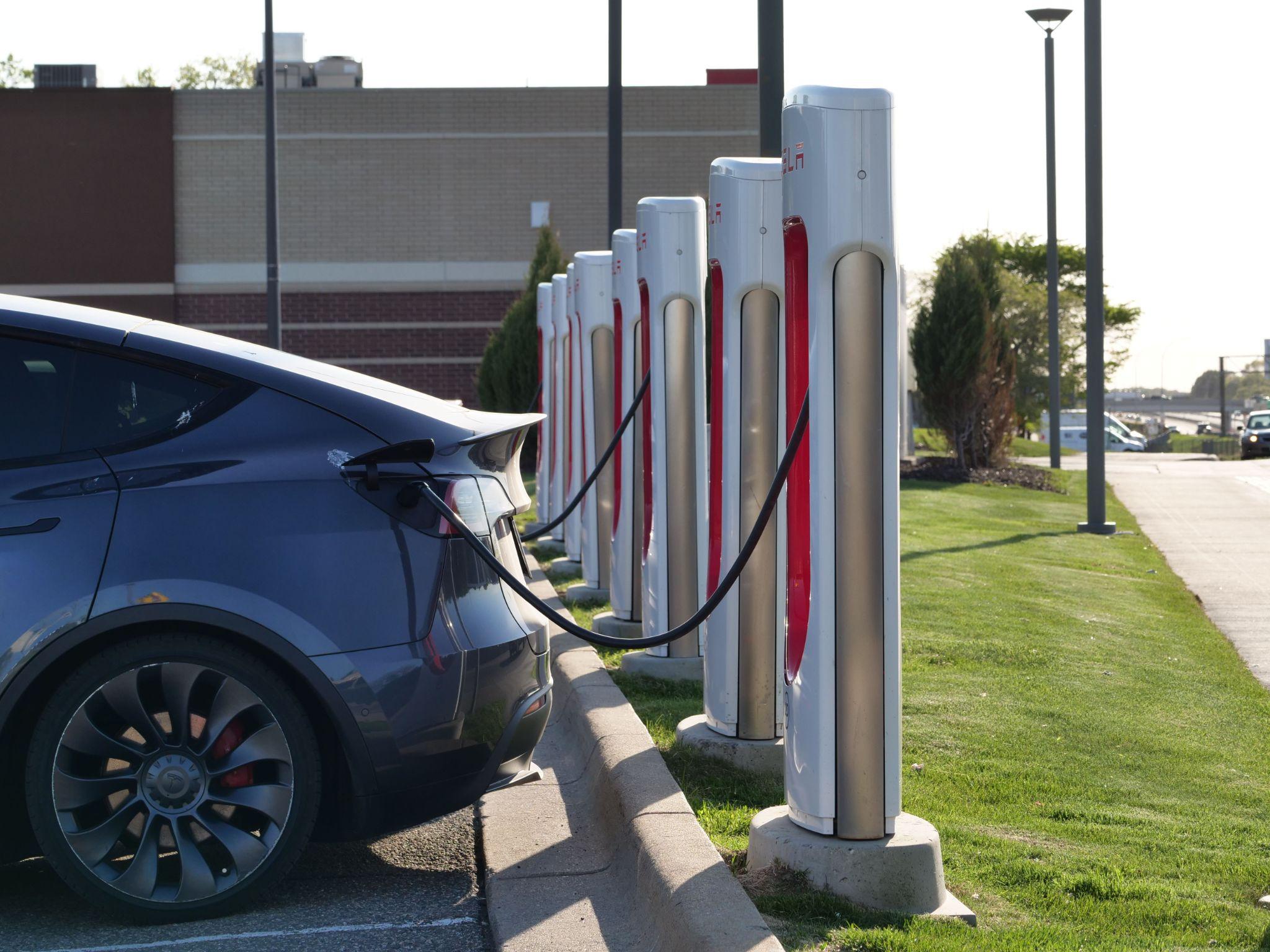
Here is something I have never done. Drive a car that runs on nothing but electricity. I have driven hybrids, but I have never had to plug one in and wait. So before I put a single paid mile on the odometer, I need to solve this. How long does a charge actually take? Where are the fast chargers in San Francisco, and which ones sit near the places I would already be idling between rides. How much am I really saving over gas, once I count the charging time as time I am not earning.
A bad charging plan eats into paid hours. I would rather solve that problem on paper, during my preparation week, than solve it in a parking lot with twelve percent battery and a rider waiting on the curb. I want to drive, not manage anxiety about a dying battery.

3. Finding the Best Time of Day to Drive
My old strategy was early mornings. Fewer drivers on the road, fewer cars competing for rides, more efficient trips. I am betting that is still true, but a year is a long time in this business, and I am not going to assume anything. Rates shift. Demand shifts. I will test blocks, early morning, midday, afternoon, and see what the numbers actually say now, not what they said a year ago.
There is one more block worth testing that I never gave a fair shot before, driving all night, say nine at night until seven in the morning. Here is why it might work this time. I live in Bangkok now, and Bangkok time runs close to the opposite of California time. My body clock is already flipped. Driving through the San Francisco night will not wreck my sleep the way it would if I were still living on Pacific time. It might turn out to be the easiest overnight shift I have ever worked.
4. Re-Learning the Soft Skills, Listening and Smiling
This part, I am not worried about. “Shut up and listen” is the message I have been preaching for the past decade. That was always the job, and I do not think a year off erased it. What I am rusty on is the timing, knowing when a passenger wants conversation and when they want quiet. I used to be hyper aware of that. I will need to get sharp again fast. I will achieve a significant part of my revenue goal with tips. Vibing with my customers leads to bigger tips.
I have been a passenger in cars driven by talkers, drivers who fill every silence and force you to carry a conversation you never asked for. I hated it. I will not be that driver. If I am unsure, I will lean toward silence. A genuine smile and real presence do more for your tips and your rating than most drivers realize, and neither one costs a word.

5. Dialing in the Music and Cabin Environment
Right now, as I write this, I have my old morning playlist going, Coffee Table Jazz on Spotify. Good vibes, low key, the kind of music that sets a tone without demanding attention. That is exactly what I want in the car, especially if I end up working the late night and early morning blocks. The right music sets the pace for the ride and for my own energy across a long shift, and that adds up over dozens of rides a day.
There is homework here too. I need to relearn how the Tesla handles heat and cooling, since I have never spent real time in one. Small things like that matter when you are living in the car for hours at a stretch. I need to get reacquainted with the Uber app itself. Walking in rusty on the app would look amateurish, and I do not want that, not after 32,000 rides. One thing is simpler this time around. In the past I ran Uber and Lyft at the same time, switching back and forth between rides, juggling two apps to achieve a higher revenue per hour. Now Uber’s rental policy means I can only drive Uber in the Uber Tesla, so that decision has been made for me. One app, one focus. And I need to dust off Waze. It rode with me for all 32,000 of my prior trips, but here in Bangkok I do not drive at all, and when I need directions I reach for Google Maps like everyone else. Waze and I have some reacquainting to do before I hit the streets of San Francisco again.

6. The Dunning-Kruger Warning
Writing all of this down, I am catching myself. Driving is not as easy as I assumed it would be, sitting here planning it on paper. There is a name for what almost happened. Psychologists call it the Dunning-Kruger effect, the rule that the least informed people, the least experienced people, tend to be the most confident. They do not know enough yet to see what they do not know. I have 32,000 rides on my record, so I am not exactly a beginner. But a year away is long enough for old confidence to drift ahead of current skill. Planning this from a laptop is easy. Real traffic. A real rider in the back seat. Finding a place to pee. Finding a place to park in San Francisco. A battery gauge ticking down. Street closures. All of it is harder than it looks on paper.

Key Takeaways
Making a list like this has humbled me. I am remembering all the small challenges of real driving, the traffic, the charging, the timing, the passengers, the fatigue, and I am not approaching this one week the way I would have a year ago. I am approaching it with humility. Logistics and soft skills matter as much as raw hours driven, and getting back to peak form is a deliberate process, not a switch you flip. The comeback is not instant. A short warm-up period, and a little humility going in, pays for itself in avoided rust.
TL:DR
- Take five warm-up days before chasing the number, and protect the routine, the gym and the keto discipline, that keeps you sharp.
- Solve the EV charging math on paper before day one, so a low battery never becomes a live decision.
- Test early mornings, afternoons, and a full overnight block. Bangkok time already has the night shift working in my favor.
- Get quiet fast. Let the passenger set the tone, and let a real smile do the rest.
- Dial in the cabin, the music, the Tesla’s climate controls, the Uber app, and Waze, before day one, not during it.