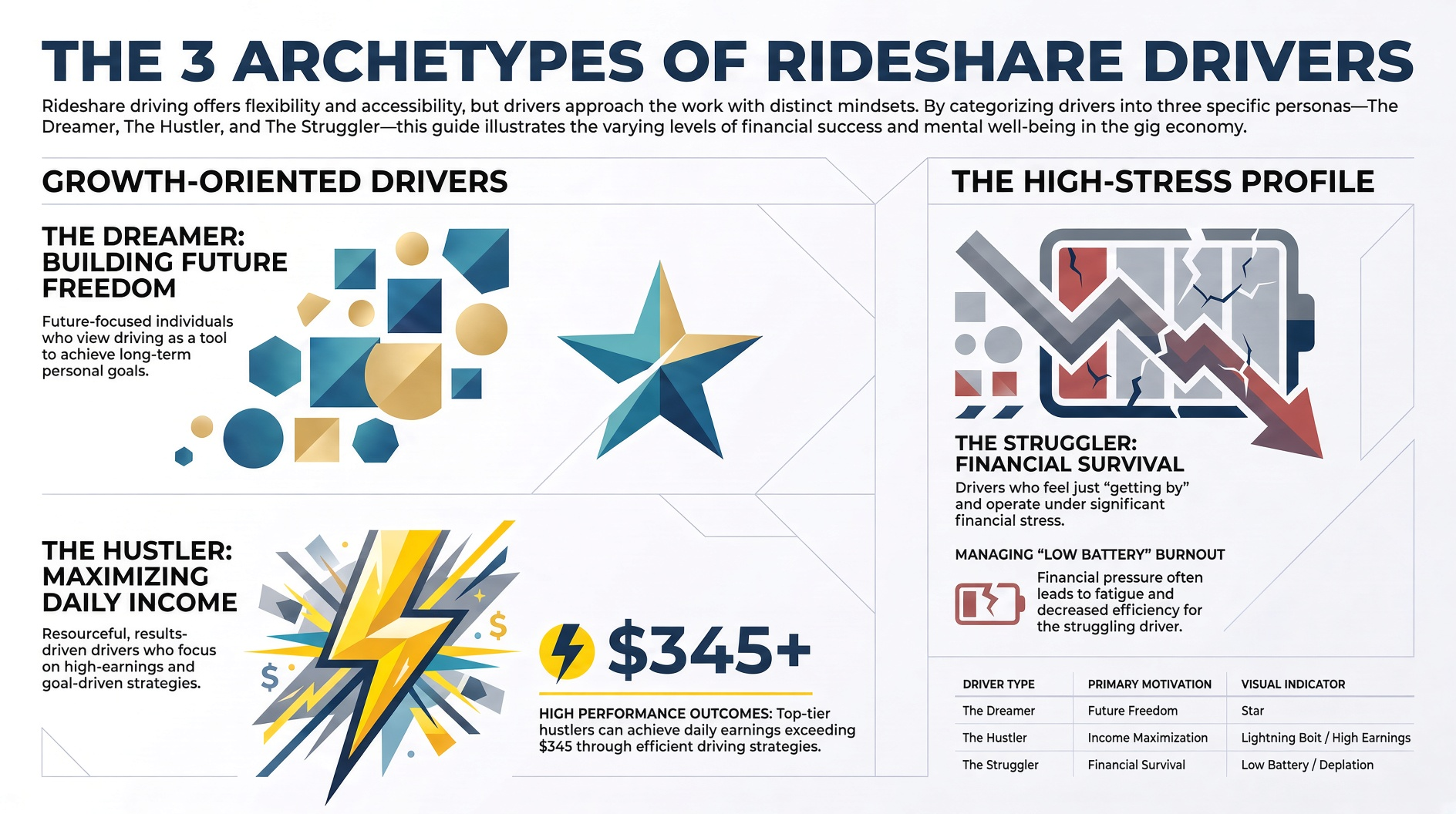
Every driver who logs into a rideshare app brings a story, a strategy, and a reason for being on the road. Over time patterns emerge. Here are three common rideshare driver types we see again and again — not judgments, just snapshots that may help you recognize your style and sharpen your approach.
1. The Dreamer
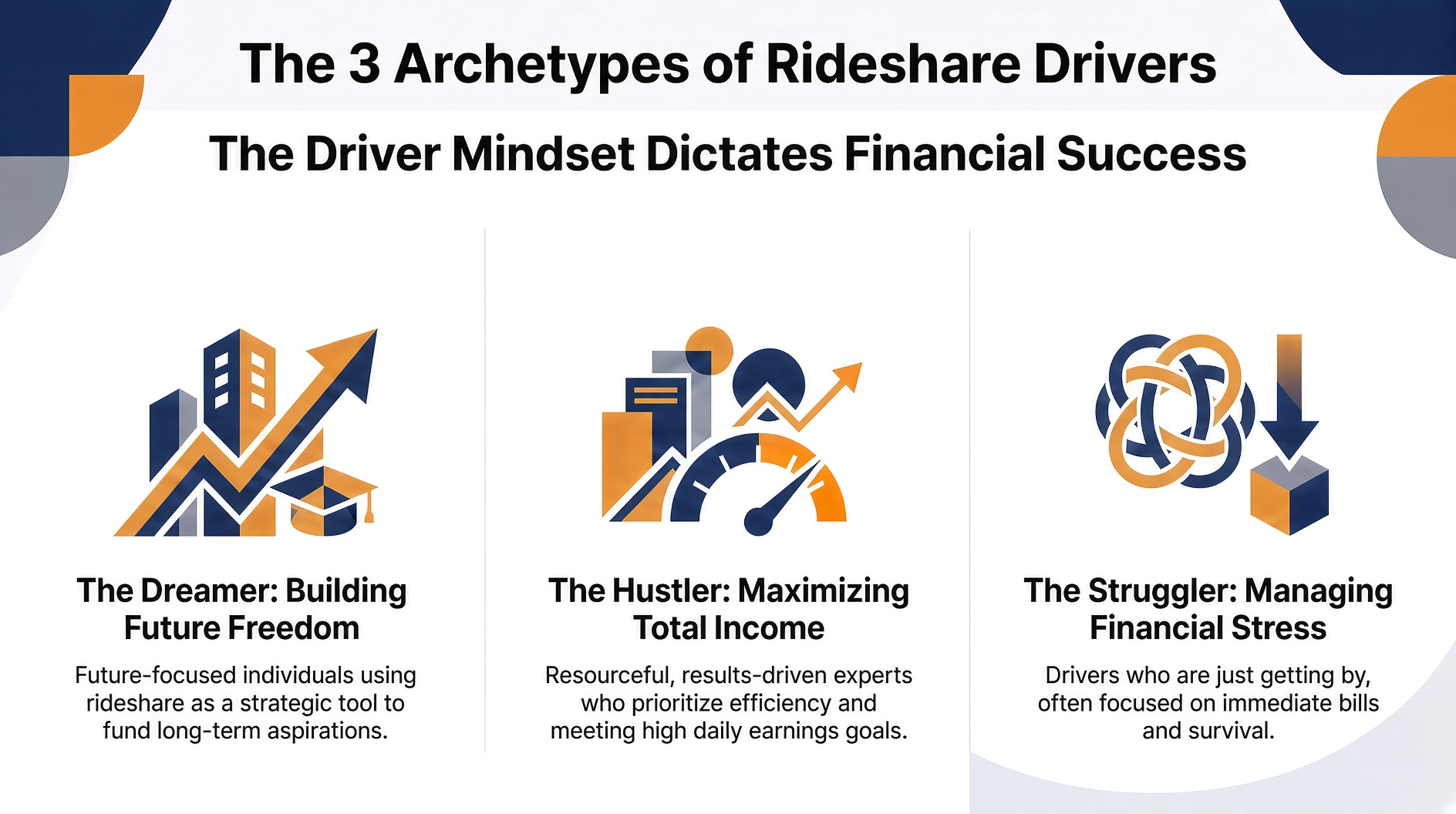
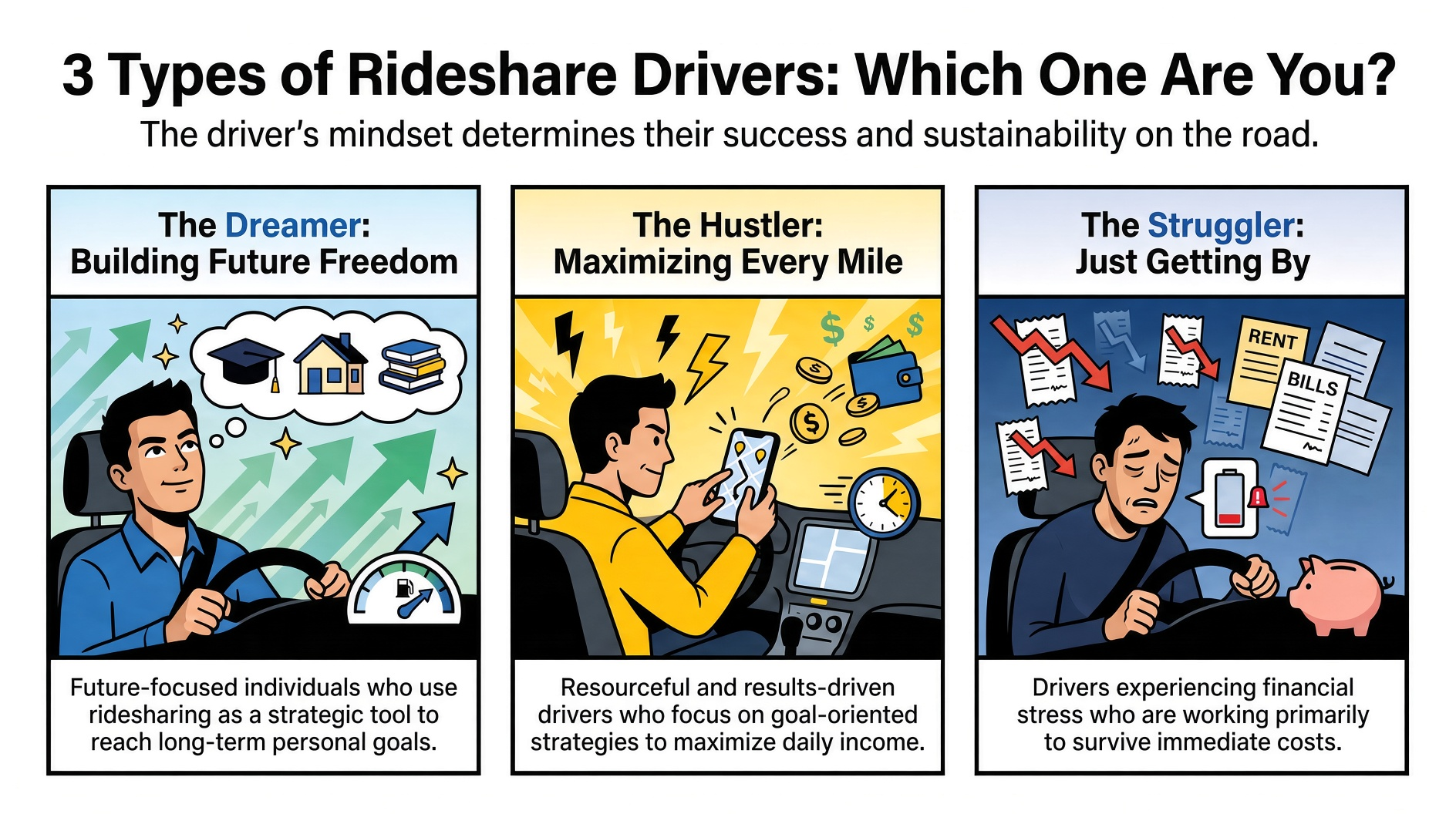
Optimistic planners who pursue a brighter future and steady, better-paying work. They’re upbeat about leaving their old circumstances behind and believe hard work will bring success.

Dreamers see rideshare as a fresh start. They’re optimistic planners who believe steady effort will bring steady opportunity. Many new drivers fit this profile. excited by possibilities, eager to learn, and hopeful that driving will improve their lives. They hear about plentiful opportunities on rideshare platforms and, with good intentions, trust that effort alone will pay off.
Downside: Dreamers sometimes expect the world to work the way it should rather than the way it does. They can become frustrated when platform algorithms and opaque policies work against them. Their wholehearted trust in companies like Uber — that these platforms have drivers’ best interests at heart — can make unpredictable results feel especially discouraging.
What they believe: Rideshare is a stepping stone to something better.
How they operate: Optimistic and organized, Dreamers treat driving as part of a bigger plan — steady income now, growth later. They schedule hours, track earnings, and reinvest in themselves (training, vehicle upkeep, maybe a side hustle).
Strengths: Consistency, long-term planning, good customer service.
Quick tip: Pair optimism with practical habits — tracking earnings, learning surge patterns, and setting short-term goals — so hope translates into consistent income.
2. The Hustler
Resourceful, resilient operators who bend rules to get results. They constantly scout for opportunities and ways to work the system, and they’re skilled negotiators with relentless persistence.

Hustlers are resourceful, scrappy, and street-smart people who treat rideshare driving like a grind worth mastering. They intimately know their driving territory, deeply understand app mechanics, and constantly hunt for any and all driving advantages — better routes, peak windows, and smart trip choices. They’re persistent and results-focused. They quickly adapt to the forever-evolving rideshare landscape and are never afraid to try new things.
Downside: Focused on outcomes, they prioritize net returns and short-term gains, often rearranging personal commitments (including plans with family) to chase high-demand periods.That drive brings advantages, but can also push boundaries. Hustlers do best when they channel their hustle into sustainable, rule-respecting strategies: optimize time, keep vehicle costs low, and balance surge-chasing with rest and safety. When done right, their adaptability turns into steady profitability.
What they believe: Opportunity is everywhere — you just have to find it!
How they operate: Scrappy, opportunistic, and persistent. Hustlers know surge patterns, negotiate creatively, and aren’t afraid to push boundaries to maximize earnings.
Strengths: Resourcefulness, high income potential, quick problem-solving.
Quick tip: Channel that energy into more compliant tactics (smart timing, optimized routes) to avoid costly risks like account suspension or deactivation.
3. The Struggler
Driving mainly to get by, with no long-term plans or pursuit of better driving strategies to make more money. Their goal is simple: cover today’s expenses and move on– that’s it.
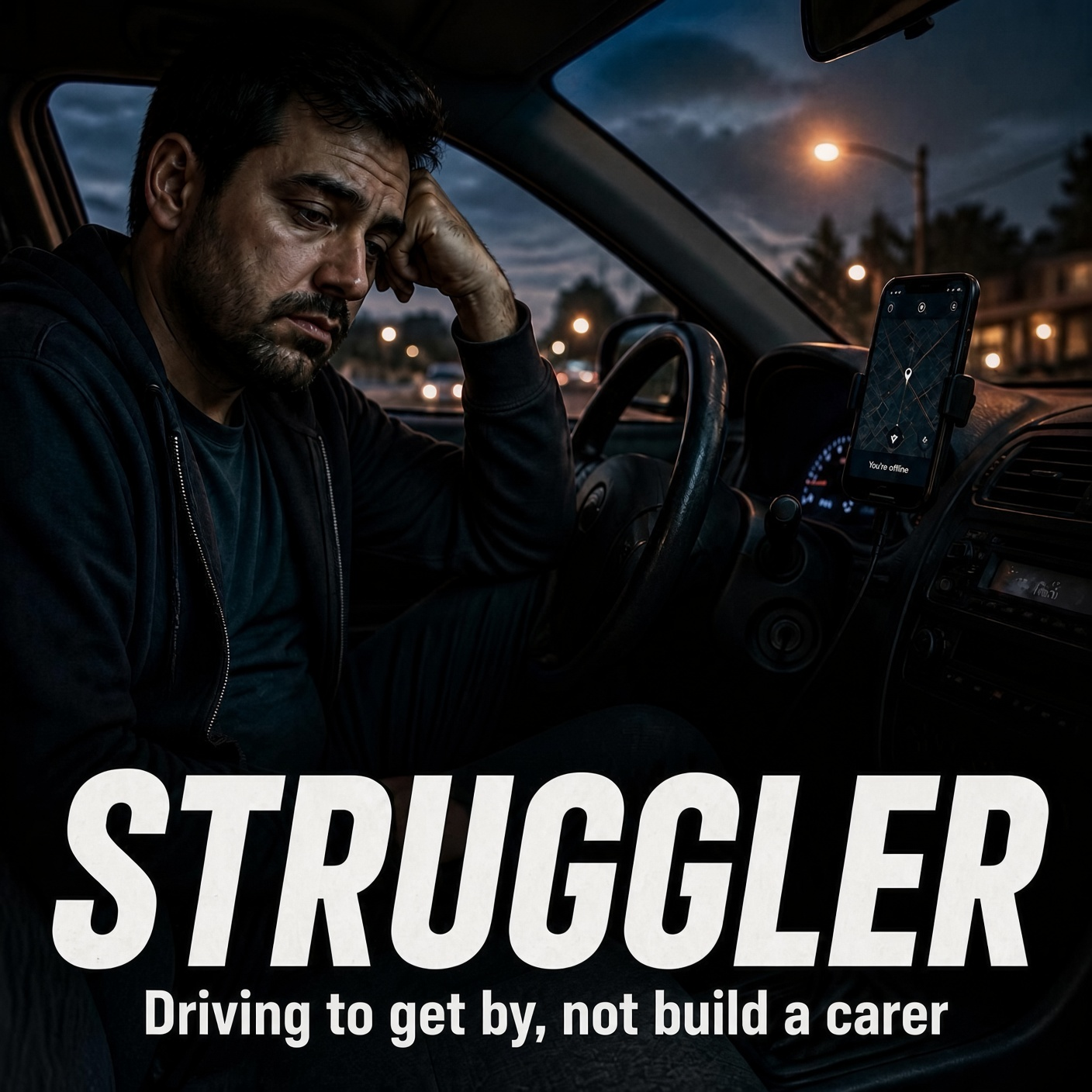
Strugglers drive out of necessity and are only focused on getting through each day. They know their monthly bills and the amount they must earn, but they lack the necessary focus to think or act beyond the next few days. Long-term planning is hard for them, and they often lack the systems that turn rideshare driving into a business — budgeting, trip selection, and record-keeping. They aren’t lazy or stupid, their attention is simply fixed on immediate survival rather than growth.
Downside: They tend to only spot mistakes in hindsight and repeat them without taking any responsibility. As a result, they frequently blame the rideshare platforms instead of adjusting their earning choices. Small changes can help: set weekly earnings targets, track expenses, choose higher-value shifts, and learn basic cost-per-mile math. Even modest long-term planning can reduce stress and improve take-home pay.
What they believe: Driving is survival — one day at a time.
How they operate: Practical and focused on today’s needs rather than future plans. Strugglers do what’s necessary to cover bills: they log long hours, take any and all rides, and try not to overthink strategy.
Strengths: Reliability, steady presence during all kinds of demand.
Quick tip: Small changes matter — decline low‑value trips, adopt a longer‑term view, or tweak one shift pattern to slightly boost overall pay.
Which Habits Will You Borrow?
Most drivers are more than one type — you might be a Dreamer who hustles on hard weeks, or a Hustler who’s currently struggling. Knowing which type you lean toward makes it easier to adopt the right habits. The fastest way to improve earnings and well-being is to borrow the best habits from each: keep the Dreamer’s optimism, the Hustler’s resourcefulness, and give the Strugglers simple routines to boost earnings and stability.
Which one are you today? Share your story in the comments.